The complete, regularly updated buying guide — compiled from real conversations with matrons across our partner orphanage network.
Last updated: 26 June 2026
—-
If you're looking for things to buy for an orphanage home in Nigeria, this list was written by the people who actually run them.
Every item on this page came directly from the children and their matrons. We ask them one question before we publish anything: if the sky is the limit, what does this home actually need?
We visit new orphanages regularly. We update this guide every time we do.
Bookmark it. Share it with your church, your office, your group chat. Come back to it before your next visit.
Before You Buy: A Note From the Matrons
Some of what you find below will surprise you. A few items are expensive. Most are not. All of them were mentioned by at least one matron across our partner network and the ones that appear in bold are the items that came up repeatedly, across multiple homes, without prompting.
This guide covers orphanages primarily caring for children between 0 and 15 years old. Homes with special needs children may have additional requirements — always call ahead and ask.
1. Food (Start Here)
Food is always the most pressing need and it is more specific than most people realise.
What to bring:
- Rice
- Beans
- Garri
- Indomie (noodles)
- Golden Morn (for toddlers transitioning off formula)
- Biscuits and long shelf-life snacks
- NAN Baby Formula — Stage 1 (0–6 months) and Stage 2
- Cerelac
The baby formula and Cerelac deserve special attention. For homes with infants under one year old, running out of formula is a crisis. These items are expensive, consumed quickly, and almost never included in standard donation drives.
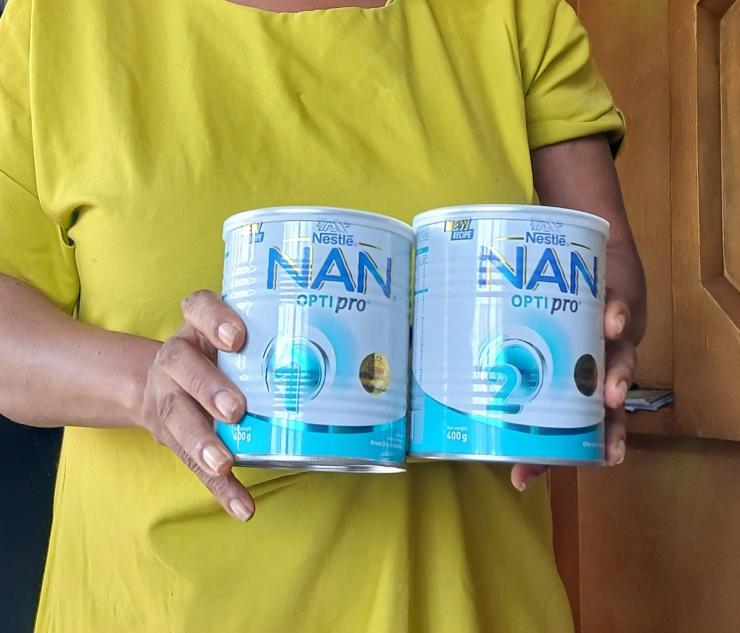
The matron of Destiny’s Child’s Orphanages and Homes holding NAN baby formula
If you are only bringing one thing, bring what feeds the babies.
2. Shoes and Clothing
Orphanages receive clothing donations regularly often more than they can use. What they consistently run short of is different.
Footwear (highest priority):
- Children’s shoes in a range of sizes ask the matron for current sizes before you visit. You will find verified matron contacts on our NextGem orphanage directory
- Black school shoes
- Church shoes (cover shoes)
- Everyday slippers
- Converse or casual trainers for sports
Clothing gaps (what is actually missing):
- Tights
- Boxers (for boys)
- Singlets and vests (unisex)
- Pants and underwear
- Baby clothes (sizes 0–2 years most needed)
Avoid purely decorative or occasion clothing unless specifically requested.
You should always aim for practical, durable, everyday items first.
3. Hygiene and Cleaning Supplies
These are monthly expenses that orphanages quietly absorb with no guaranteed supply.
What to bring:
- Bar soap and liquid soap
- Detergent (Any washing powder)
- Toothbrushes and toothpaste
- Sanitary pads — needed every month, almost never donated. If you are a woman reading this, you already understand.
- Baby cream (any brand)
- Baby powder (any brand)
- Baby wipes
- Baby towels
- Buckets
- Mosquito nets
- Insect repellent (Raid or equivalent)
- Spoons and basic utensils
Note: A consistent donation of hygiene supplies — even a small bag each visit — reduces one recurring pressure on the matron.
4. School Supplies
School fees get attention. The supplies children need to actually do their schoolwork do not.
What to bring:
- Exercise books — the single most requested item across every home we have visited. Pack more than you think you need.
- Pens and pencils
- Erasers
- School bags (nobody remembers this)
- Crayons and colouring books
- Math sets
- Calculators (for secondary school children)
- Markers for boards
- Rulers
If you would like to sponsor a child’s school fees, head over to our donation page here.
5. Baby Essentials
For homes with infants and toddlers, these are non-negotiable.
What to bring:
- Baby clothes (sizes 0–2 years)
- Baby towels
- Feeding bottles
- Baby cream and powder (any brand)
Important note on feeding bottles: The mouthpiece degrades with repeated sterilisation and becomes a hygiene risk over time. Most donors do not know this. If you are bringing feeding bottles, include spare mouthpieces or replace the full bottle every three months.
6. Furniture and Household Items
This section is less obvious but it came up in multiple conversations with matrons, unprompted.
What orphanages are quietly living without:
- Bed foam and mattresses: several homes reported torn, wet, or inadequate sleeping surfaces. Stronger, waterproof-backed foam is specifically needed.
- Baskets and storage boxes: many homes store children’s clothing in nylon bags because they have nothing better. This is not a minor thing; it affects hygiene, organisation, and the dignity of how children’s belongings are kept.
- Benches and chairs: for learning and schoolwork. Not plastic chairs. We need wooden or sturdy benches that hold up to daily use by active children.
- Fans (standing fans)
- Television screens
7. Devotional and Recreational Items
These are the items nobody thinks to bring and that make an outsized difference to the daily life of children in a home.
Recreational:
- A football
- A skipping rope
- Whot cards (the most-played game in Nigerian homes)
- Ludo, draughts, or chess sets
- Colouring books and crayons
- A bicycle (for older children in homes with outdoor space)
Devotional:
- Bibles
- Hymn books
- Church bags
These items cost very little. Yet, they are missing from almost every home.
8. Large Purchases: The Items That Change How a Home Functions
These are larger purchases. They are also the ones that once donated permanently reduce the burden on the matron and the children.
- A sewing machine: Children in orphanages go through clothing quickly. A sewing machine allows the home to mend clothes rather than replace them, and teaches the older children a practical, income-generating skill in the process. Several matrons mentioned this without being asked.
- A washing machine and dryer: For any orphanage caring for more than 20 children, hand-washing laundry every day is a physical and logistical burden that consumes enormous time and energy. For homes with infants where clothing changes multiple times a day it is nearly impossible to keep up without one.
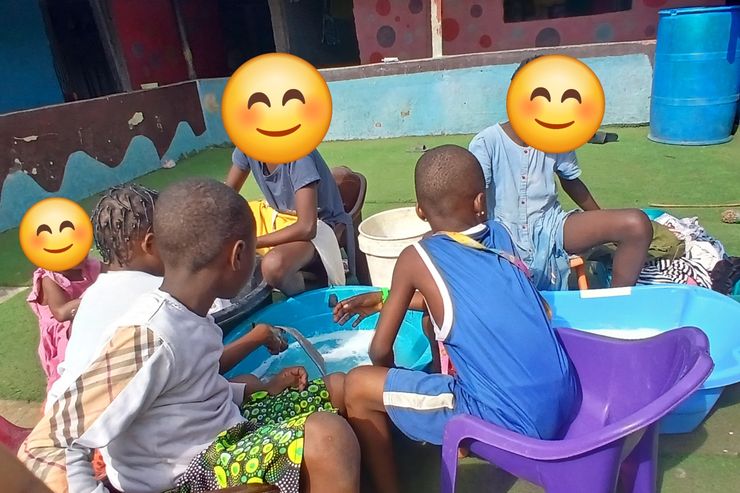
Children at our partner orphanage doing laundry.
These are not luxury requests. They are infrastructure.
How to Drop Off or Send What You've Bought
For everyday items on this list:
You can donate directly through NextGem Foundation. Every item reaches a verified partner orphanage and is tracked.
Contact us at:
📧 nextgemfoundation@gmail.com
🌐 nextgemfoundation.com/donate
If you want to buy a specific item
Like a washing machine, sewing machine, or bed foam for a specific orphanage:
Email us at nextgemfoundation@gmail.com with the subject line ”Specific Donation.”
Tell us what you want to give and which orphanage, or let us match you to the home that needs it most. We will coordinate everything from there and confirm receipt directly.
At NextGem, every naira and every item is accounted for.
One More Thing
When we ask matrons what they need, most of them hesitate before answering. They have learned from years of experience not to ask for too much. The least we can do is ask anyway. And then actually show up with what they said.
If you are planning to visit an orphanage in Nigeria this year save this list. It was made by the people who need it most.
—-
This guide is compiled from direct conversations with matrons across NextGem Foundation’s verified partner orphanage network.
It is updated regularly as we visit new homes. If you are an orphanage director or matron who would like to contribute to this list or join our directory, contact us at nextgemfoundation@gmail.com.
—-
NextGem Foundation is a Nigerian non-government organisation dedicated to building structured platforms and pipelines for orphaned children across all 36 states.
Learn more at nextgemfoundation.com or reach us at nextgemfoundation@gmail.com.
NextGem: A future for every orphan.