Somewhere in Nigeria, a child living in an orphanage is exceptionally fast. Or exceptionally strong. Or has the kind of coordination that, with the right coaching, becomes a career.
No one knows this yet. No one has been given the chance to find out.
That is the problem the Orphanage Games exists to solve, and the reason we're asking organisations to invest in it.
The Problem
Talent is distributed evenly across Nigeria. Opportunity is not.
Children with access to academies, school sports programmes, coaches and competitions get discovered.
Children without that access don't. No matter how talented they are.
Children living in orphanages sit furthest from all of it. No school sports budget advocating for them. No parent driving them to trials. No network noticing what they can do.
The Orphanage Games exists to close that gap: a structured platform where these children can compete, be observed, and be connected to what comes next.
What Makes the Orphanage Games Different?
For us, this is not another fun day out. It is a point of discovery.
The programme combines six things that rarely show up together in one event:
- Grassroots sports development
- Talent identification
- Youth development
- Positive visibility
- Community engagement
- Corporate social investment
A child who shows exceptional speed, endurance or coordination on the track is identified, documented, and pointed toward the next step. The long-term vision for us at NextGem is a pathway: from orphanage to opportunity.
2025: Proof That Discovery Can Happen
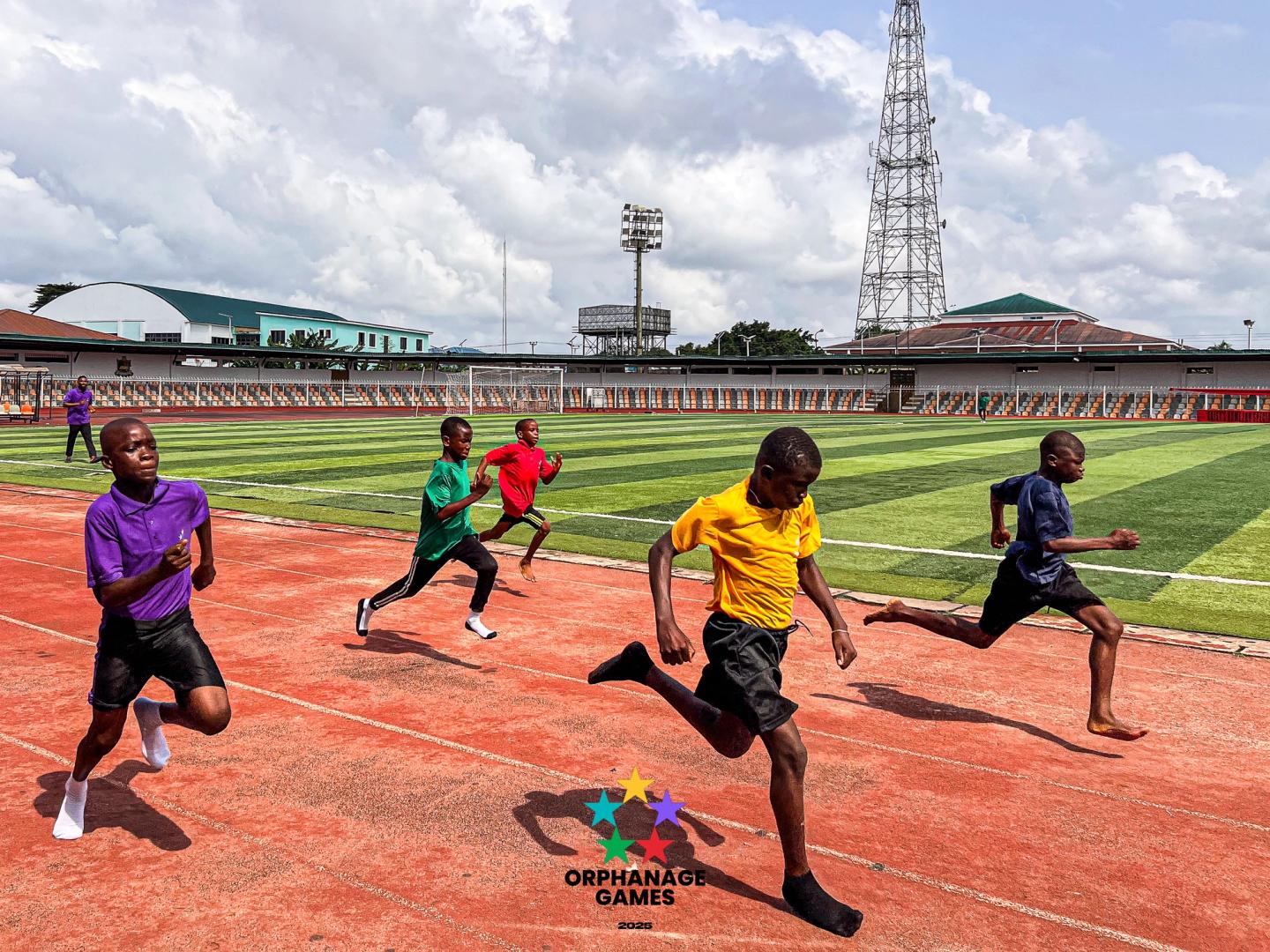
The first Orphanage Games brought together five orphanages and more than 135 children for a structured athletics programme, with the Bayelsa State Athletics Association on hand to bring a technical eye to the children's performances.
Three children showed why this matters.
Lawrence, 17, from Blossoms Home for the Deaf and Blind, is a deaf athlete who showed notable speed on the track.
Benjamin, 11, from Victoria's Orphanage and Child Care Centre, showed promising speed and athletic ability.
Mercy, 14, also from Victoria's Orphanage and Child Care Centre, showed promising athletic ability of her own.
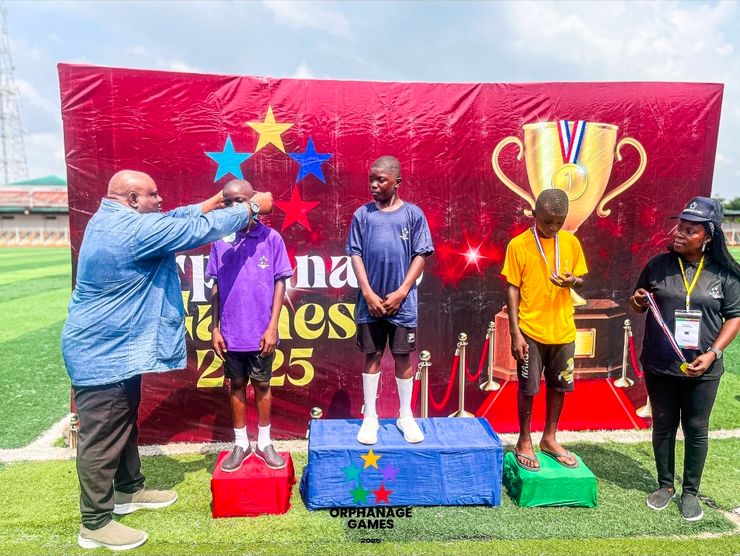
These three are proof that talent can be found in places conventional pathways never reach, if someone builds a way to look.
We're not claiming any of them will go professional. But we're making sure they're seen, documented, encouraged, and given a real chance to develop. That's the standard the programme is built to meet, for every child who steps onto the track.
From Discovery to Opportunity
We are building the Orphanage Games as the start of a pathway, not the end of one:
DISCOVER — Child participates in the Orphanage Games
IDENTIFY — Performance is observed and promising talent is flagged
REGISTER — Athlete's performance and information are documented
DEVELOP — Child is connected to coaching, training or sporting opportunities
COMPETE — Athlete progresses to local and state-level competitions
ADVANCE — Strong performers move toward national-level competition
REPRESENT — With continued development, some athletes may eventually compete internationally
Why This Matters
A child in an orphanage discovers they're exceptionally fast.
Without exposure, no one finds out. Without development, the talent never gets refined. Without competition, it never gets tested. Without a pathway, the child never learns what they could have become.
The Orphanage Games is the first point on that pathway. And the impact reaches well past the sport itself. A child who develops athletic talent can gain confidence, discipline and mentorship and from there, educational opportunities, scholarships, competition pathways, and eventually professional opportunities and income of their own. Some go on to support the very institutions that raised them.
This is why we treat the programme as human-capital development, not charity.
Why Corporate Sponsors Matter
Sponsorship is what turns a one-day competition into a sustainable development platform. Sponsors make it possible to provide:
- Professional sporting equipment
- Competition kits
- Qualified officials and coaches
- Medical support
- Transportation
- Nutrition
- Professional documentation and media coverage
- Talent identification and follow-up
- Access to future sporting opportunities
A sponsor is funding access for a group of children conventional talent pipelines consistently skip.
The Opportunity for Corporate Partners
As a corporate partner, the Orphanage Games gives your organisation a direct, credible connection to:
- Youth development
- Grassroots sports
- Talent development
- Education and human capital
- Health and wellbeing
- Inclusion
- Community development
- Measurable social impact
Sports brands get a direct fit.
Banks and financial institutions can anchor the partnership in youth development, financial inclusion and future-readiness.
Health and nutrition brands connect naturally to healthy childhood development.
Education and human-capital organisations align with talent, confidence and opportunity.
And for any company running a broader CSR or ESG programme, this is a measurable, story-driven community investment with real names, real numbers and a real pathway attached.
The Bigger Vision
NextGem Foundation began with the Orphanage Games 2025, and as the founder, my hope is that the 2026 Orphanage Games is one step toward a long-term national platform for sporting talent discovery among children in orphanages.
Our ambition is simple: where a child grows up should never determine whether their potential is discovered.
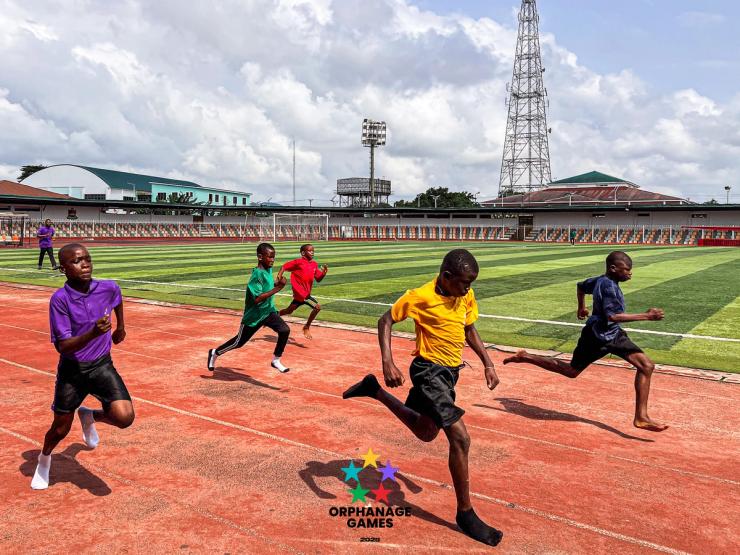
Imagine if the next Usain Bolt is growing up in a Nigerian orphanage right now.
The question isn't whether that child exists. The question is whether anyone will ever get the chance to find out.
That's what the Orphanage Games is built to do.
If you’re interested in partnering with us, Contact NextGem Foundation to discuss sponsorship packages for the 2026 Orphanage Games.