If you're looking for an orphanage need list, here's the honest version written from the inside, not from a visitor's perspective.
Let me start by saying this clearly: food and toiletries matter.
A bag of rice feeding fifty children for three days is not a small thing. Toothpaste, soap, sanitary pads are not luxuries but necessities that orphanage directors quietly run out of and quietly scramble to replace, often with money they don’t have.
So if you have been showing up with groceries and household supplies, please don’t stop.
But let’s talk about the full picture. Because as someone who has spent time inside these homes as a weekly volunteer who has watched the children, watched the routines, and watched the gaps. I can tell you that the list of what’s missing is longer than most people realise.
And some of them can be provided for with less than two thousand naira.
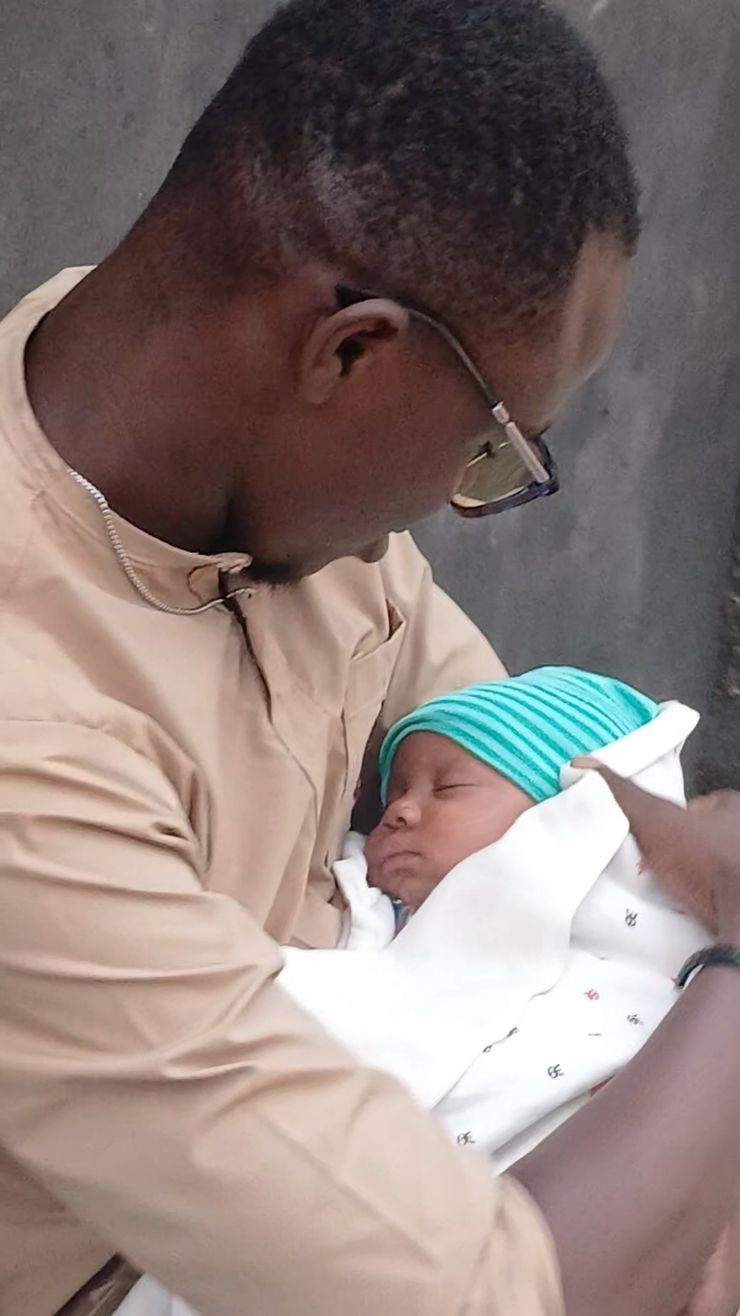
Jeremiah volunteering at a NextGem Partner Orphanage.
Quick Orphanage Need List
- Food & Nutrition: Rice, beans, garri, Indomie, NAN baby formula, Cerelac
- Hygiene: Sanitary pads, toothpaste, toothbrushes, soap, baby cream, baby wipes
- Education : Exercise books, pens, pencils, rulers, school bags, calculators
- Play & Recreation: Football, skipping rope, chess set, ludo, colouring books, crayons
- Clothing: Underwear, vests, boxers, school shoes, slippers, baby clothes (0–2 years)
View a more in depth list at our Things to Actually Buy for an Orphanage
The Things Nobody Thinks to Bring
- Sanitary pads. For every orphanage with teenage girls, this is a monthly emergency. Quietly. Consistently. With zero fanfare. If you are a woman reading this, you already understand what I mean.
- Toothpaste and toothbrushes. Not just soap — the full dental package. Oral health in children with limited access to medical care is more serious than people give it credit for. As someone with a medical background, I will just say: the consequences of neglected dental hygiene compound over time in ways that are entirely preventable.
- Exercise books and stationery. A pack of exercise books. Pens. Pencils. A sharpener. A ruler. These are small purchases that become big deals inside a home running on a tight budget.
- Coloring books and crayons. Hear me out. Cognitive development, fine motor skills, emotional expression — colouring covers all three. It is also one of the quietest, most focused activities you can give a group of children of mixed ages. One colouring book keeps a child occupied and genuinely engaged. Buy ten.
The Thing I Notice Most
Here is what I consistently see when I walk into our partner orphanages: children figuring out how to entertain themselves with nothing.
Children are endlessly imaginative . But in almost all otphanages there are almost no communal toys. No shared equipment. Nothing that naturally pulls a group of children together into organised play.
The toys don’t have to be expensive. A football. A skipping rope. A set of tennis balls. A chess set — and if you bring a chess set, I am personally available to come and teach them how to play it.
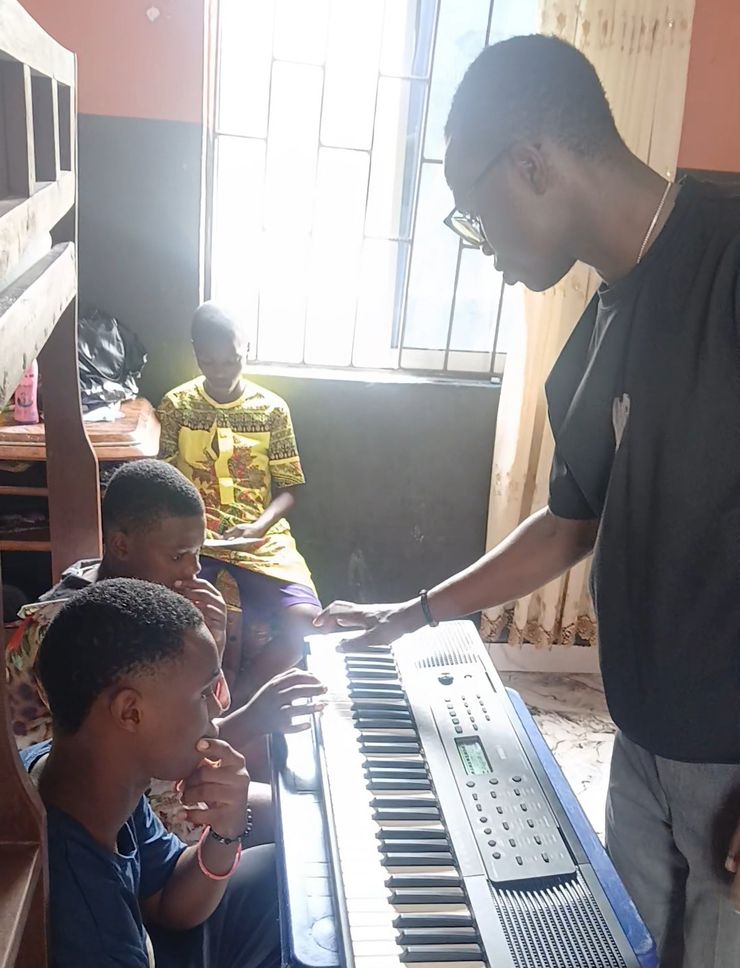
Jeremiah as a NextGem volunteer, taking the children on their music lessons with a keyboard donated by NextGem.
These are items that cost almost nothing and create hours of structured, communal, physically and mentally engaging activity.
There is something else about communal play that I think gets overlooked. Children in orphanages sometimes struggle with the social dynamics of shared living with the difference between competing and cooperating, between looking out for yourself and looking out for your team.
A skipping rope does not fix that. But it creates the conditions for it. A chess game does not teach patience. But it exercises it. Repeatedly. Every single week.
Play is not a reward for children who have their basics covered. It is a basic. And for children who are already carrying more than their share of life’s weight, it is especially non-negotiable.
The Bigger Picture
The numbers behind Nigeria’s orphan care system are sobering.
Nigeria has an estimated 17.5 million orphaned and vulnerable children. There are approximately only 100 listed orphanages providing structured care nationwide.
ASOHON (Association of Orphanage Homes Operators in Nigeria) warned in 2023 that the country does not have nearly enough homes to meet the need, and that the government continues to leave the burden almost entirely to NGOs, faith communities, and private individuals running on donations and determination.
UNICEF’s data shows that approximately 60 percent of Nigeria’s nearly 3 million internally displaced people are children.
Every wave of conflict or disaster produces a new generation of children without parents. The institutional care system is not growing fast enough to receive them.
The homes that exist are fighting to survive. Chronic underfunding. Understaffing. Facilities in many cases without reliable electricity or clean running water. Educational programmes that are the first thing cut when money runs short.
Children with special needs like those at Blossom’s Home for the Deaf and Blind, one of our partner orphanages — often without access to trained staff or adaptive equipment their development requires.
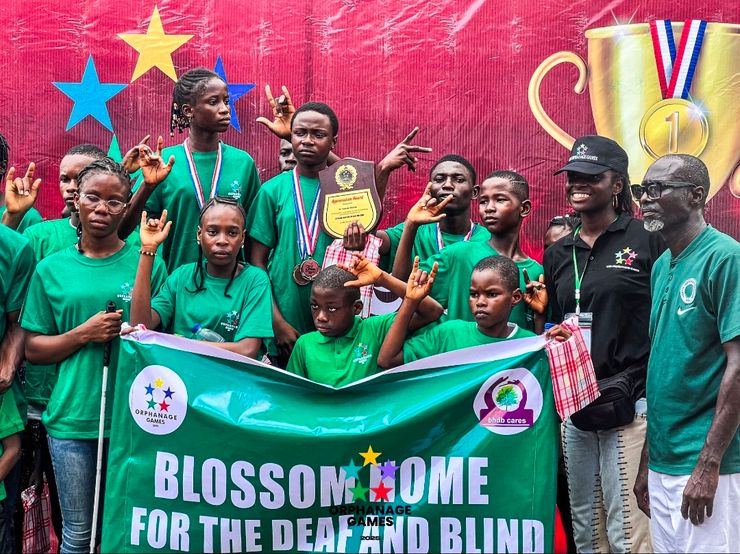
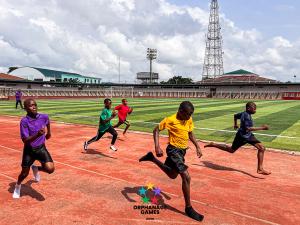
Children from Blossoms Home for the Deaf and Blind at the 2025 NextGem Orphanage Games.
And then at 15 or 18, most of them age out. Into a society that does not know they exist and a labour market that requires qualifications they were not adequately prepared for. Nigeria’s child rights act, passed in 2003, contains no provisions for children after they leave care. They simply leave.
That is the system. That is what your bag of rice is propping up.
So What Do They Actually Need?
Let me be practical, because that is the kind of person I am.
Things to bring on your next visit:
- Sanitary pads (always needed, rarely donated)
- Food stuffs (palm oil, beans, rice, garri)
- Toothpaste and toothbrushes
- Exercise books, pens, pencils, rulers
Colouring books and crayons - A football, skipping rope, or tennis balls
- Chess set, ludo, draught — anything that creates structured group play
- Storybooks (reading for pleasure is a luxury in most homes)
Read our full list of what to actually bring to an orphanage.
Things that make an even bigger difference over time:
- Consistent, predictable monthly financial contributions — even small ones that can be planned around.
- Skilled volunteers who show up on schedule — teachers, coaches, healthcare workers, anyone with a transferable skill
- Structured programmes that develop children academically, physically, emotionally, and socially
- The decision to see these homes not as charity cases but as serious social infrastructure deserving of serious support.
The children I volunteer with are not waiting to be rescued. They are waiting for someone to show up consistently and take them seriously. That is the thing that costs the least and matters the most.
A Personal Note
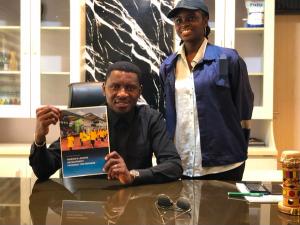
I got into this because Abiye — NextGem’s founder — dragged me along one day. That is the honest version of the story.
And then I met the children. And then I started teaching them keyboard. And then one week I couldn’t make it, and the next week three of them asked Abiye if I was coming back.
That question changed something for me. These children remember. They notice. They build expectations around the people who show up for them and when those people disappear, they notice that too.
Consistency is a form of love. And it is something every one of us can offer, regardless of what we bring in our hands.
If you want to volunteer with NextGem Foundation — weekly, structured, and genuinely impactful — join our Refiners programme.
📧 nextgemfoundation@gmail.com
🌐 nextgemfoundation.com/volunteer
📱 @nextgemfoundation
—————————————
Jeremiah John is an anatomist, NextGem Refiner, and weekly volunteer at partner orphanages in Bayelsa State. He has been teaching keyboard to orphaned children since early 2026 and considers himself reasonably difficult to get rid of.