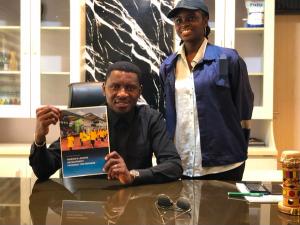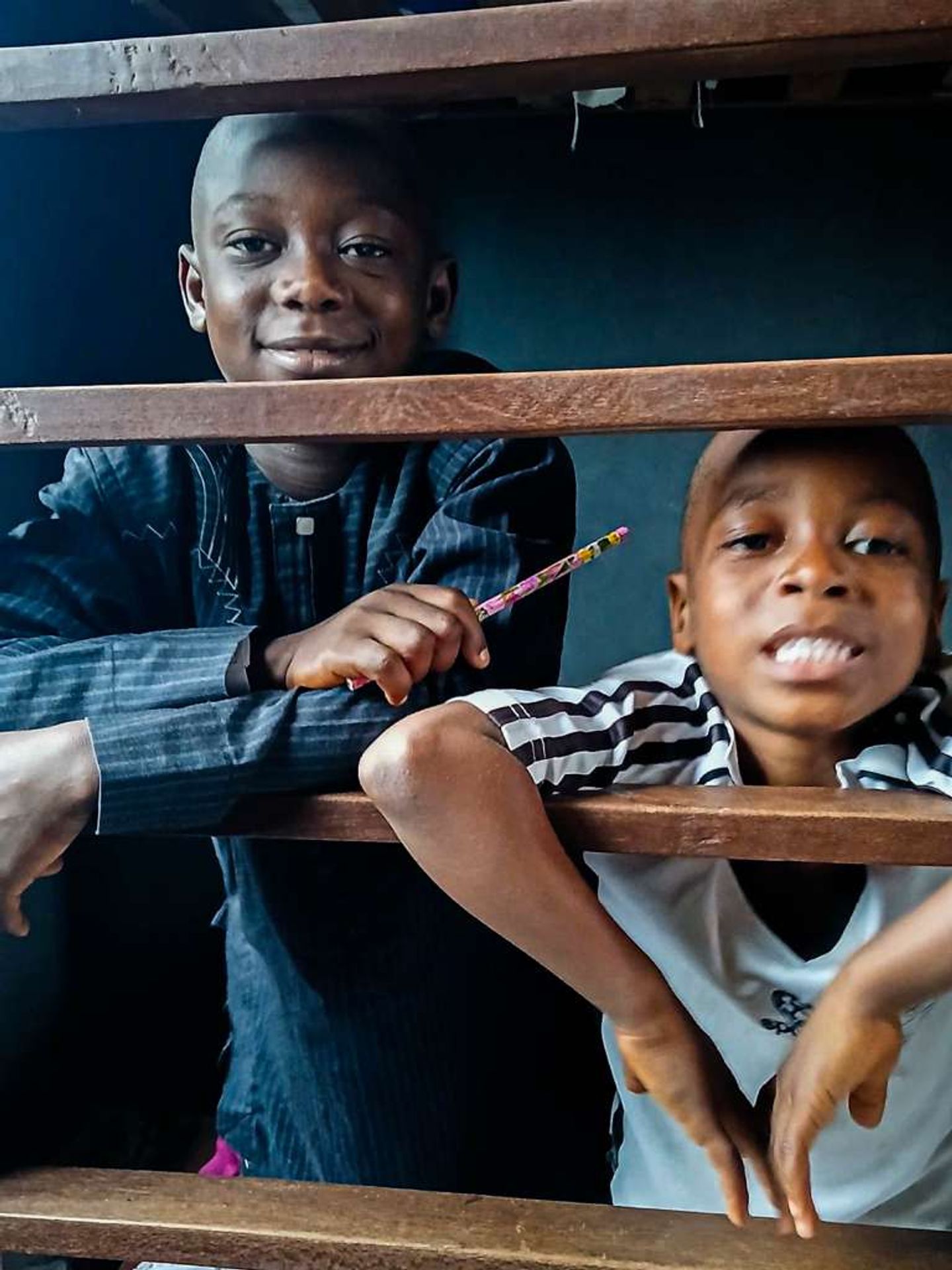
Nigeria is home to an estimated 17.5 to 18 million orphaned children.
That number places us among the top five countries in the world with the highest orphan population. Nearly 18 million children — in one country — growing up without one or both parents.
To put that into context, the total 2026 population for the country, Netherlands, sits at about 18.13 Million people.
And yet, if you asked the Nigerian government exactly how many orphanages are currently operating in the country, they could not tell you. No credible, up-to-date national data exists.
The last comprehensive government report on orphaned and vulnerable children was released in 2008.
That was over 15 years ago.
This is not a minor gap. This is a sector operating largely in the dark — underfunded, untracked, and almost entirely unsupported by the systems that should be holding it together.
I know this not from research alone, but from experience.
Every Sunday, I volunteer at Destiny Child's Orphanage in Bayelsa. And every Sunday, before I am even fully through the gate, 5-7 children are already running toward me — hugging me, pulling at my arms, talking over each other.
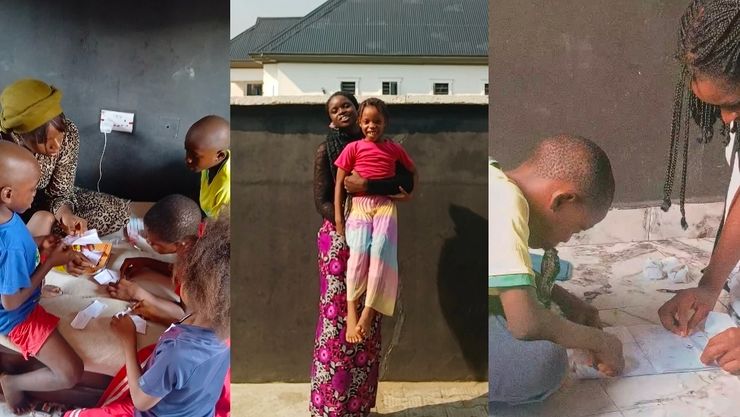
It is one of my favourite moments of the week.
It is also one of the most revealing.
These children are not running because I am special. They are running because one person showing up consistently — same day, every week — is enough to feel like an event. That is how rare reliable, personal attention is in their lives.
One woman, Mrs. Peace Okereke, has been caring for all 13 of them largely alone since she opened Destiny Child's two years ago.
The older children help — but the oldest is under 15. They are still children themselves.
And yet they go to school, come home, cook, clean, and look after the younger ones without being asked. They carry more daily responsibility than most children their age with full family support will ever know.
But this is not a story about broken children.
This is a story about a broken system that is making extraordinary children invisible.
We started NextGem Foundation because we believe this can change. But before we talk about solutions, we need to be honest about the problem.
The Reality Inside Nigeria's Orphanages
Walk into the average registered orphanage in Nigeria and you will find caregivers doing extraordinary work under impossible conditions. They are stretched thin, underpaid, and running homes that were never designed to handle the number of children they now carry.
The problems are not secrets. They are structural:
Chronic underfunding. Most orphanages in Nigeria — including most government-owned ones — depend almost entirely on donations and ad hoc charity. There is no reliable funding pipeline. A home that receives a large donation in January may have nothing by June. Children's school fees, medical bills, and daily feeding are all subject to the generosity of whoever shows up that month.
No minimum standards being enforced. Studies across multiple Nigerian states have found serious gaps in basic facilities — clean water, functioning toilets, adequate sleeping space, medical access. In many rural orphanages, electricity is a luxury. In some, the buildings themselves are structurally unsafe.
Fake and unregistered homes. One of the most troubling realities of the Nigerian orphanage landscape is the existence of fraudulent child care homes — institutions that operate under the guise of charity while exploiting the children in their care or using them to solicit donations that never reach them. The government itself acknowledges this problem but lacks the capacity to fully address it.
Children prepared for survival, not for life. Perhaps the most damaging gap is the one no one talks about enough: the almost total absence of preparation for adulthood.
Most orphanages, through no fault of their own, are focused on immediate survival — feeding children today, keeping the lights on this week.
Long-term questions — what will this child do at 18? Where will they go? What opportunities exist for them? — are rarely part of the conversation. Not because nobody cares, but because the system has never made space for it.
The Association of Orphanages and Homes Operators in Nigeria (ASOHON) put it plainly in a 2023 statement: "Nigeria does not have enough foster homes or orphanages. The government needs to prioritise child welfare systems instead of leaving it all to NGOs."
They are right. But the private sector and civil society cannot wait for that priority to arrive.
What Is Actually Missing
The orphanage sector in Nigeria does not just have a funding problem. It has a structure problem.
There is no coordinated network connecting homes across states. There is no shared platform that allows orphanages to be discovered, verified, and supported by companies, volunteers, or individuals who genuinely want to help. There is no system that identifies talented children in these homes and creates pathways for their futures.
An academically excellent child in an orphanage in Bayelsa State has almost no mechanism to be discovered by a scholarship programme in Lagos. A company in Abuja with a CSR budget has no easy way to find a credible, accountable orphanage to partner with. An NYSC corps member who wants to volunteer their skills has no structure to plug into.
Everyone is operating in isolation, and the children pay the price.
The Question Nobody Is Asking
Here is the question that drives everything we do at NextGem:
What happens to an orphan at 18?
In Nigeria, most orphanages have a de facto age limit. When a child ages out, they leave. And in most cases, they leave with very little — no job placement support, no mentorship network, no verified credentials that their talents or achievements were ever recognised.
They re-enter a society that already struggles to absorb its formally educated, fully supported youth. And they do so from a position of significant disadvantage.
This is the gap NextGem Foundation exists to close.
What We Are Building
NextGem is not another charity asking you to donate so children can eat today.
Feeding children is important — but it is not enough, and it is not our focus.
We are building infrastructure for the orphan sector in Nigeria.
Through three connected programmes:
NextGem Spotlight brings orphaned children onto competitive platforms — academic, talent, and sports competitions held during school breaks across the country. The goal is simple: give these children the chance to be seen. By schools, by companies, by sponsors, by anyone who can open a door.
NextGem Support provides structured financial assistance — school fees, medical bills, and targeted welfare support — funded by NGOs, individual donors, and corporate CSR partnerships.
Every naira is tracked and accounted for.
NextGem Refiners places NYSC corps members, goodwill and church volunteers in partner orphanages as consistent, on-ground support. Not one-off visits. Regular, structured engagement that gives children access to mentorship, tutoring, and community.
And beyond these three arms, we are working toward something larger: pipeline partnerships with Nigerian and multinational companies that will create real pathways from orphanage to employment.
Imagine a child who wins our academic competition at 14, receives support through secondary school, and at graduation steps into a confirmed graduate trainee role at a company that partnered with NextGem specifically to find young people like them.
That is the future we are building toward.
Why Now
Nigeria's orphan population is not shrinking. Poverty, insurgency, and health crises continue to create new vulnerable children every year. The 2021 World Bank report estimated that COVID-19 alone orphaned approximately 4,000 additional Nigerian children between 2020 and 2021.
The need is not going away. But the ecosystem to meet that need — structured, accountable, and forward-looking — barely exists.
Someone has to build it. We have decided that someone is us.
What You Can Do
If you are reading this as a company or CSR professional: we are actively seeking partners who want their investment to do more than fund a one-time visit.
We are building something you can attach your brand to with pride — a verifiable, structured programme with real children, real data, and real outcomes.
Click here to partner with us.
If you are reading this as an individual: follow our journey. Share this. Tell someone running an orphanage in your state that NextGem exists. Every connection matters.
If you know a legally registered orphanage that can benefit from our program, click here to submit their names.
If you are an orphanage director or manager: we want to hear from you.
We are building a national directory of verified, registered homes across all 36 states. Getting listed costs nothing. The visibility it creates could change everything for the children in your care.
Click here to submit your orphanage for verification.
The sector is broken. But broken things can be fixed if the right people decide to fix them.
We have decided.
———
NextGem Foundation is a Nigerian non-profit organisation dedicated to building structured platforms and pipelines for orphaned children across all 36 states.
Learn more at nextgemfoundation.com or reach us at nextgemfoundation@gmail.com.
NextGem: A future for every orphan.