17.5 million.
That is the estimated number of orphaned and vulnerable children in Nigeria — making us the country with the second-highest orphan population on earth, behind only India. To put it in perspective: the entire population of the Netherlands is 17 million people. We are talking about a crisis, in one country, larger than most nations.
And yet the last time Nigeria produced a comprehensive national count of its orphaned children was 2008. No updated data. No revised policy. A crisis the size of a country, met mostly with silence — and occasionally, with rice.
That silence is what NextGem Foundation exists to break. But not with noise. With structure.
What the Existing Response Gets Wrong
Every Easter. Every Christmas. Every time someone's organisation plans a “community outreach” — the orphanages of Nigeria receive visitors.
They bring food. Clothes. Toiletries. They take photographs with the children. They leave.
I am not dismissing this. A bag of rice feeding fifty children for three days is genuinely useful. But I want to be honest about what it is and what it is not.
It is relief. It is not investment.
And the difference matters enormously, because the problem Nigeria’s orphaned children face is not primarily a food problem. It is a visibility problem. A structure problem. A future problem.
The children in these homes are not being prepared for adulthood. They are being maintained until adulthood arrives — and then, in most cases, released into a society that does not know they exist, a labour market that requires qualifications they were not adequately prepared for, and a world that has spent their entire childhood seeing them as charity subjects rather than as people with capacity, ambition, and potential.
Some orphanages in Nigeria today are, without anyone intending it, the breeding grounds for tomorrow’s derelicts. Not because the people running them don’t care. But because a system built entirely around keeping children alive today has no mechanism for building their futures tomorrow.
That is the gap. That is what NextGem is here to close.
The Proof of Concept: December 2025
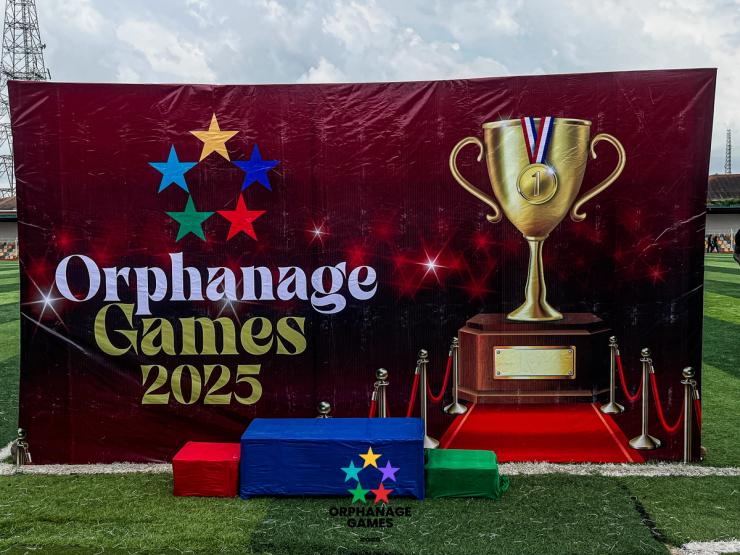
On the 6th of December 2025, we ran the first Orphanage Games in Yenagoa, Bayelsa State.
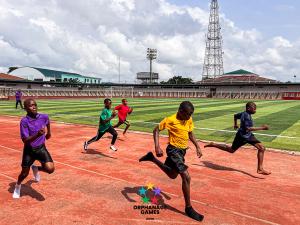
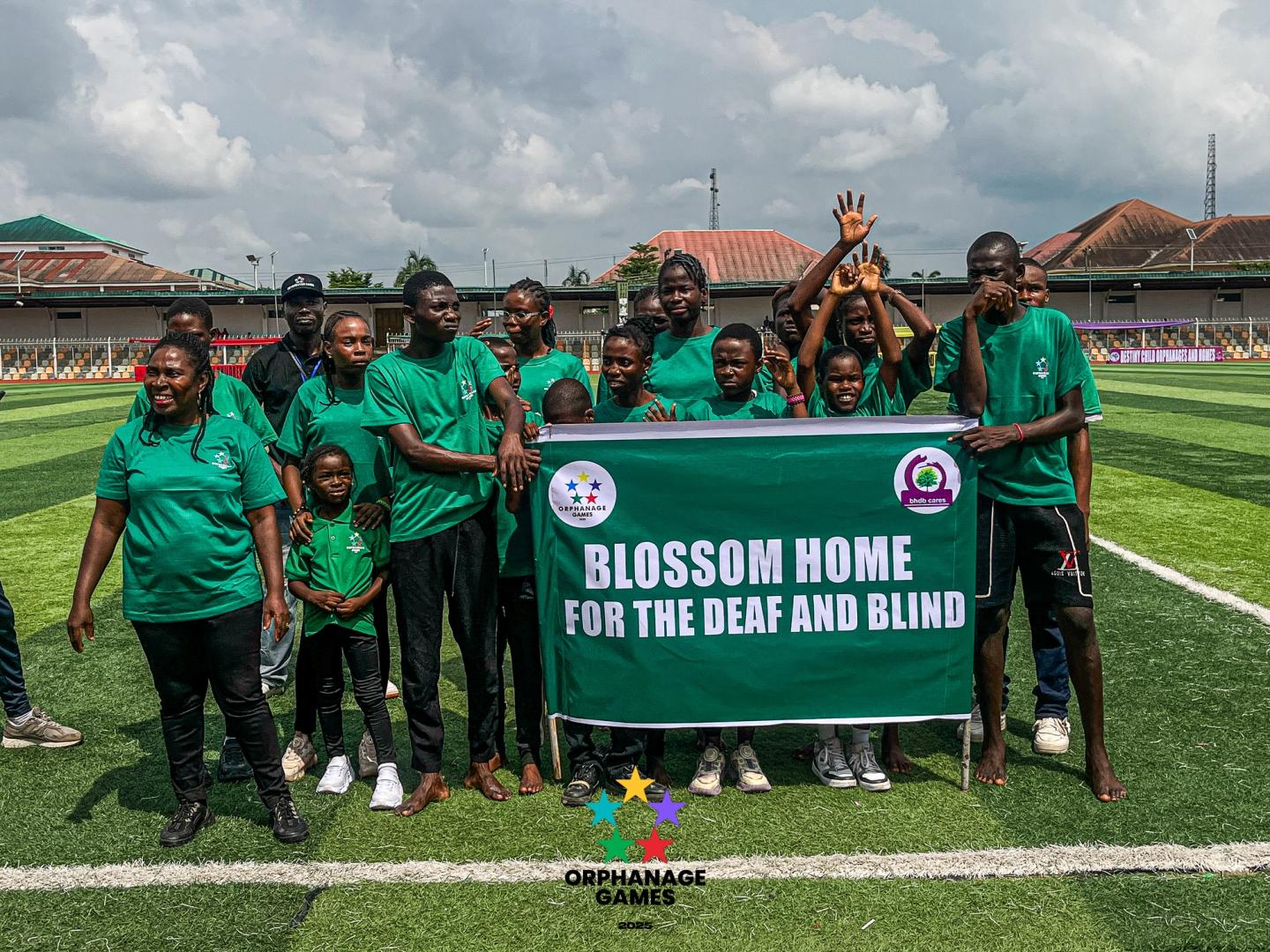
Five orphanages. 135 children. Track and field events — 100 metres, 200 metres, relay races. Cultural performances. Medals for first, second, and third place in every category. Over 50 volunteers. Government officials. Corporate sponsors. A stadium.
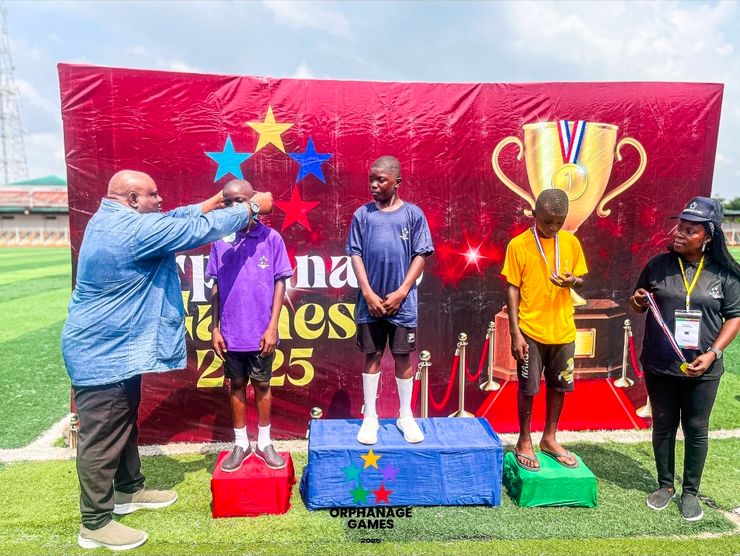
Not a donation drive. Not a Christmas visit. A proper sporting event, designed entirely around the children as participants — as athletes, as performers, as competitors.
I want to tell you what happened.
One of our volunteers, Oraibi Tonye-Luke, wrote to me afterwards. He said:
“This wasn't the typical orphanage visit where you feel pity. These kids were superstars, there to show the world what they're made of. Their genuine smiles, laughter, leaps for joy — it was all visible. You made that part of them shine for everyone to see.”
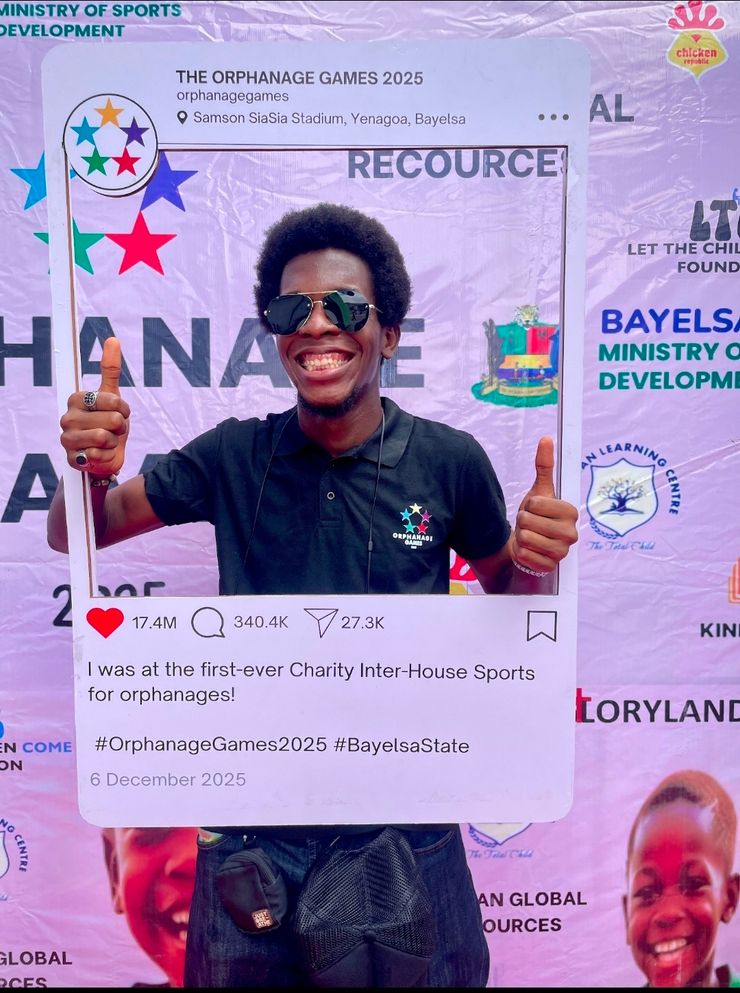
📷:Oraibi
The representative of the Commissioner of Sports attended. Afterwards, he said that looking at the Orphanage Games, he realised there was so much more to be done to help the community.
The Permanent Secretary of the Bayelsa State Ministry of Women, Children Affairs, Empowerment and Social Development was present. Her words stayed with me. She said that even her office — the government office specifically responsible for child welfare — had never thought to bring the children out in this way. And that they hoped to continue it.
The government agency responsible for these children had never thought to bring them out and let them be seen. We did. With no government budget. With volunteers, community donations, and the conviction that these children deserved a proper day.
That is the gap NextGem fills. And that event proved the model works.
What We Are Actually Building
NextGem Foundation is not a charity. It is infrastructure.
We are building three connected systems that, together, do what no single donation drive can:
NextGem Spotlight creates competitive platforms — academic, talent, and sports events held during school breaks — that make orphaned children visible. Not visible as objects of pity. Visible as talented, capable, competitive young people that companies, scholarship programmes, and sponsors can discover and invest in.
NextGem Support provides structured, accountable financial assistance — school fees, medical bills, welfare support — funded by individuals, NGOs, and corporate CSR partners. Every naira tracked. Every outcome reported.
NextGem Refiners places NYSC corps members ,individual and church volunteers in partner orphanages on a consistent weekly schedule. Not one-off visits. Not Christmas drop-ins. People who show up every week, who know the children by name, who are accountable to a structure.
And beyond these three arms, we are building toward something larger: direct pipelines to employment.
Partnerships with Nigerian and multinational companies that will create confirmed pathways from orphanage to career — so that a child who wins our academic competition at 14 does not simply receive a certificate and a photograph, but enters a track that ends, years later, with a job.
Why This Model Is Different
The Orphanage Games proved something that I believe is the most important insight NextGem has produced so far:
People will show up for these children, if you show them the children correctly.
When we presented them as athletes and performers — not as recipients, not as charity cases, not as problems to be solved — the response was extraordinary.
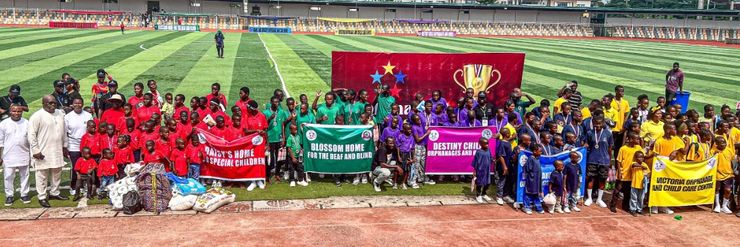
Sponsors came. Officials came. Volunteers came from Port Harcourt. People who were not there saw the photographs and told us they wished they had.
The children were not different that day. The framing was different.
That is the NextGem model in one sentence: change the frame, and you change what is possible.
A child presented as a charity case will attract sympathy and a bag of rice.
A child presented as a future graduate trainee, a future athlete, a future musician — will attract investment.
Both children are the same child. The difference is who believes in them enough to present them that way.
We do.
What Comes Next
NextGem is young. We are operating in Bayelsa State, building toward a presence in all 36 states. We have five partner orphanages, 135+ registered children, a formal MOU with Destiny Child’s Orphanages and Homes, and one Orphanage Games event behind us.
We are looking for corporate partners who want their CSR investment to produce something more than a receipt and a photograph. Partners who want to attach their company’s name to a child’s trajectory — not just their Christmas.
We are looking for individuals who want to give consistently, not just generously.
We are looking for organisations, churches, NYSC chapters, and anyone who sees what we are building and wants to be part of it.
The work has started. The model works. The children are ready.
The question is whether Nigeria’s companies, institutions, and citizens are ready to see them the way they deserve to be seen.
📧 nextgemfoundation@gmail.com
🌐 nextgemfoundation.com/partner
📱 @nextgemfoundation
‐—————————————-
NextGem Foundation is a registered Nigerian non-profit organisation building structured platforms and pipelines for orphaned children across all 36 states of Nigeria.